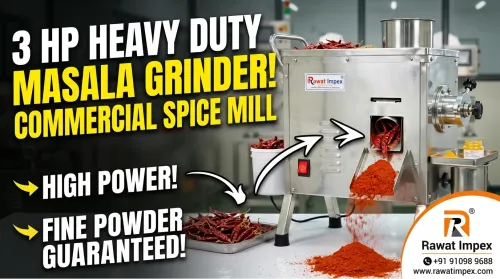
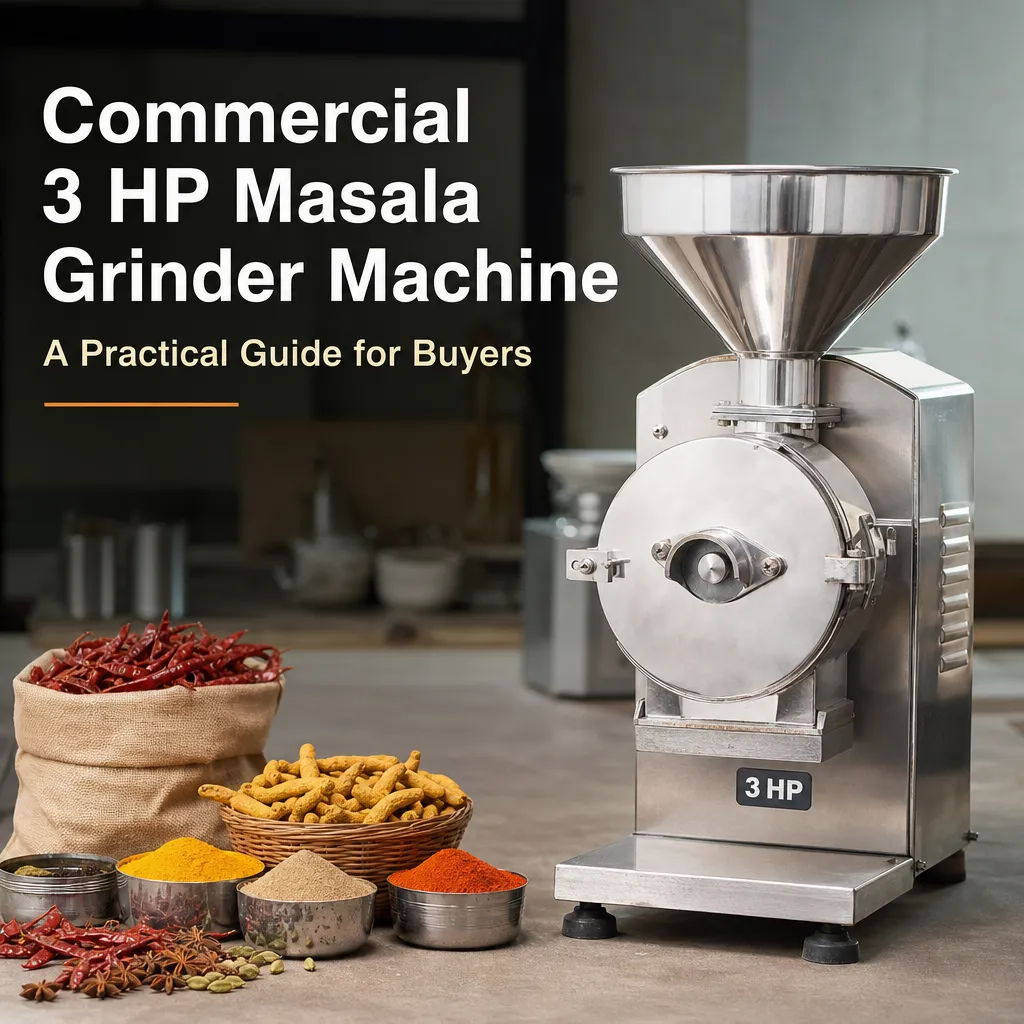
If you’re searching for a commercial 3 HP masala grinder machine, chances are you’re trying to solve a very specific problem: consistent spice grinding at production scale—without frequent breakdowns, quality loss, or downtime.
A 3 HP masala grinder is a common “sweet spot” for many small and growing businesses: spice brands, local retailers doing bulk grinding, catering kitchens with high volume, and food processing units that need speed and repeatable texture. Below is a buyer-focused guide to help you understand what matters most before choosing a machine.
---
What a 3 HP Masala Grinder Is (and Why HP Matters)
HP (Horsepower) indicates the motor’s power capability. In simple terms, a 3 HP motor is typically selected for:
- Higher throughput than small home grinders
- Grinding tougher spices and blends with better consistency
- Running longer work cycles in commercial environments
However, horsepower alone doesn’t guarantee performance. True output depends on:
- Grinding mechanism design (blade/hammer/impeller system)
- Feed control and chamber design
- Screen size / fineness control setup
- Motor stability and drive quality
- Material quality and wear resistance
---
Common Types of Commercial Masala Grinders
When people say “masala grinder,” they might mean different machine designs. You’ll typically see:
1) Hammer Mill / Impact Grinder Style
- Best for chili, cumin, pepper, coriander, dry masala mixtures
- Creates fine particles through impact and airflow
- Common in spice grinding applications
2) Blade / Cutting Grinder Style
- More suitable for softer spices and blended dry powders
- Works well if the machine can maintain uniform particle size
- May be less ideal for very tough, dry ingredients unless configured well
3) Multi-stage or Feature-rich Variants
Some commercial units add:
- Improved airflow (for consistent fineness)
- Better sieving control
- Heat management to preserve aroma
If your goal is fine, uniform masala powder, impact/hammer-type commercial grinders are often preferred—especially for frequent production.
---
What “Commercial Output” Should Mean in Real Life
Before purchasing, define what output means for your business. Ask:
- How many kg per hour do you need?
- Do you need fine powder or coarse masala?
- Will you grind single spices (like cumin) or blends (like garam masala)?
- Will you grind only dry spices or semi-moist ingredients too?
A commercial grinder like a 3 HP unit is usually expected to handle consistent daily production—if configured properly and operated with correct feeding.
---
Key Features to Look for in a 3 HP Masala Grinder
1) Grinding Chamber and Wear Resistance
Masala grinding causes heavy wear. Look for:
- Durable liners/blades
- Good steel quality
- Proper balancing to reduce vibration
2) Fineness Control (Screens/Sieves)
Your product quality depends on particle size distribution. A good commercial setup allows:
- Multiple screen options (fine, medium, coarse)
- Easy switching and cleaning
3) Motor Stability and Cooling
Spice grinding is continuous work. Ensure:
- Efficient motor cooling
- Solid base frame
- Stable drive system (reliable belts/couplings if used)
4) Ease of Cleaning
Hygiene and speed matter when you switch between spice batches. Prefer:
- Easy access to the grinding area
- Simple cleaning process to avoid residue contamination
5) Safety and Guarding
A grinder is a high-risk machine. Check for:
- Proper guarding around moving parts
- Safety switches
- Secure discharge and covers
---
Masala Quality: How to Avoid Common Grinding Problems
Problem: Powder Is Too Coarse
Likely causes:
- Wrong screen size
- Dull blades or excessive wear
- Overfeeding (machine can’t complete grinding properly)
Fixes:
- Use a finer screen
- Maintain blades/impact parts
- Feed in controlled batches
---
Problem: Powder Smells “Burnt” or Loses Aroma
Likely causes:
- Heat buildup from heavy continuous grinding
- Not enough airflow or poor ventilation
Fixes:
- Grind with breaks if needed
- Ensure the machine design supports airflow
- Avoid excessive overloading
---
Problem: Uneven Texture (Too Many Big Pieces)
Likely causes:
- Inconsistent spice moisture
- Improper mixing before grinding
- Worn grinding parts
Fixes:
- Dry spices properly before grinding
- Mix evenly
- Plan replacement/maintenance cycles
---
Best Use Cases for a 3 HP Commercial Grinder
A 3 HP masala grinder machine is often a strong fit for:
- Spice grinding shops doing daily batch processing
- Small spice brands needing consistent fineness and repeatability
- Catering kitchens or production units with regular masala prep
- Food processing units that produce dry spice mixes in volume
- Distributor-style grinding where different customers require different blends
If you’re starting out, a 3 HP class machine can help you scale without jumping immediately to very large industrial systems.
---
How to Choose the Right Setup (Beyond Just Buying “3 HP”)
A smart purchase isn’t only about horsepower—it’s about matching the machine to your spice workflow.
Consider these practical questions:
- Are you grinding mostly single spices or blends?
- Do you need powder fine for customer-facing packets?
- How often will you switch spices (cleaning frequency)?
- What’s your expected daily operating time?
- Do you need portability or installation flexibility?
For buyers in regions like Indore, many businesses prefer equipment that can be installed quickly and maintained easily—especially if the unit will run daily during peak seasons.
---
Maintenance Basics That Protect Your Output
To keep grinding performance consistent:
- Inspect wear parts regularly (blades/liners/screens)
- Clean after each batch to prevent residue buildup
- Keep the feeding consistent—avoid forcing material in
- Follow lubrication and belt/drive checks if applicable
- Don’t ignore unusual vibration or noise (often signals misalignment or wear)
Well-maintained grinders stay consistent longer, which helps you deliver better product quality and reduce downtime.
---
Where a Local Supplier Can Help (Context, Not the Main Point)
When buyers source equipment locally, they often value practical assistance like installation guidance, part availability, and support for setup and operation. In and around Indore, many businesses end up exploring commercial grinders from vendors such as RAWAT IMPEX (available via https://www.rawatimpex.com) because it’s easier to discuss requirements and confirm suitability for your grinding use case.
Still, your best buying decision should come from matching the machine to your spice, fineness, and throughput needs—not only the brand or listing.
---
Quick Checklist Before You Buy
Use this short checklist to evaluate a 3 HP masala grinder:
- [ ] Correct grinding type for your spices (impact/hammer vs blade/cutting)
- [ ] Multiple screens or fineness control options
- [ ] Durable grinding chamber/liners and wear-resistant parts
- [ ] Stable motor cooling and reliable drive setup
- [ ] Easy cleaning and quick residue removal
- [ ] Safety guards and safe discharge design
- [ ] Expected throughput matches your daily targets
- [ ] Maintenance plan is clear (parts, wear intervals, cleaning routine)
---
Final Thought: Choose for Consistency, Not Just Power
A commercial 3 HP masala grinder machine can be an excellent production upgrade—provided it’s chosen for the right fineness control, wear resistance, and operating fit. When those factors align, you get the real win: consistent masala powder, better customer quality, and fewer interruptions during daily processing.
If you tell me your spice types (e.g., chili/coriander/garam masala), target fineness, and daily kg requirement, I can help you narrow down the most suitable grinder configuration and screen/operation approach.
Keywords